
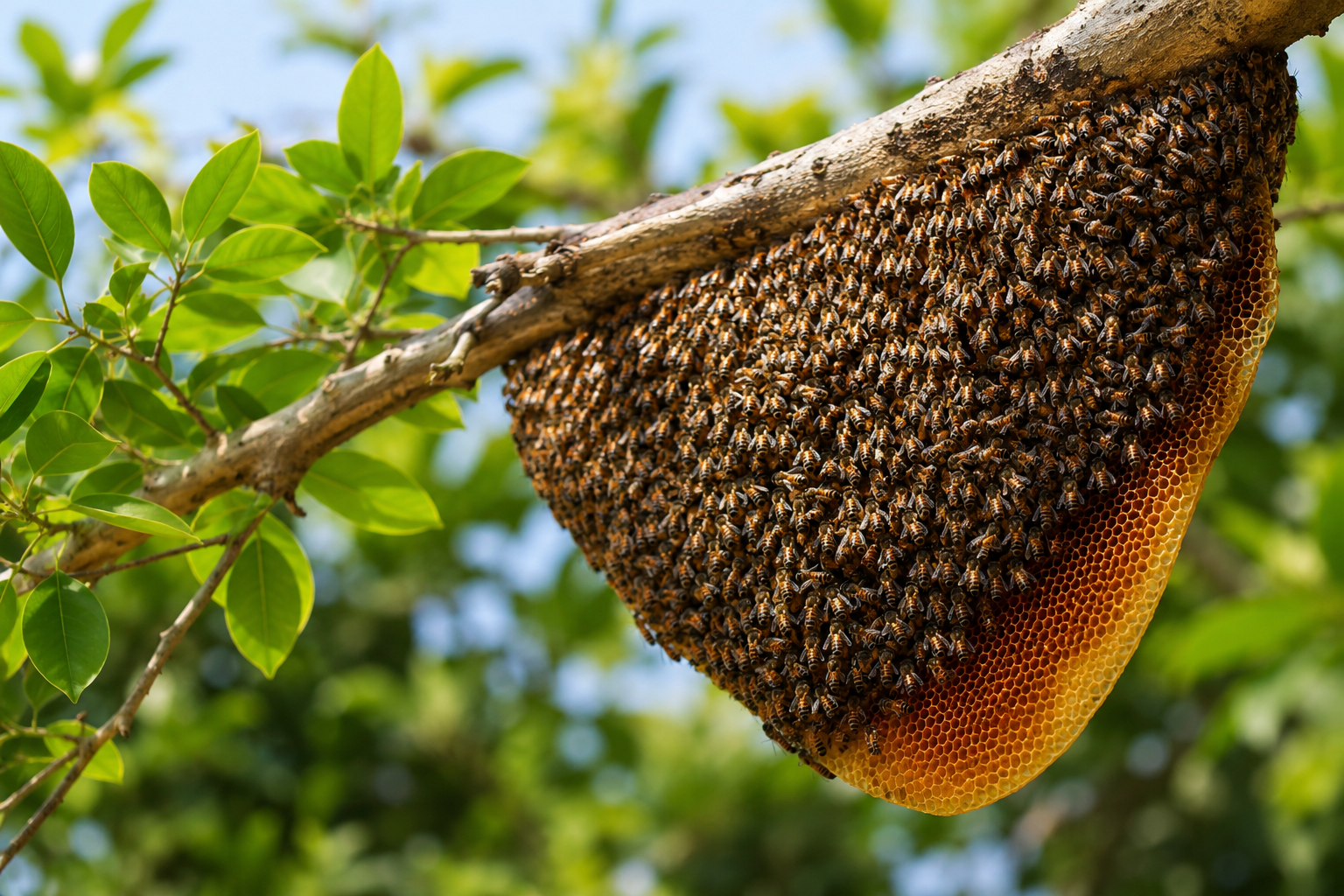
Why Responsible Bee Hive Management Matters in Modern Pest Control
Introduction
In recent years, awareness regarding environmental protection and sustainable pest management has increased significantly across India and the world. Among the most important ecological contributors are honey bees and other pollinators, which play a critical role in agriculture, biodiversity, food production, and environmental sustainability.
Despite this importance, bee hives are often destroyed indiscriminately due to fear, inconvenience, lack of awareness, or improper pest management practices. In many cases, unscientific chemical spraying, burning of hives, or unsafe extermination methods are adopted without considering environmental consequences.
As a responsible pest management organization, Easy Care Integrated Solutions India Pvt. Ltd. believes it is important to educate clients, institutions, residential societies, industries, and public authorities about responsible bee hive management practices.
This article explains:
-
The ecological importance of bees
-
The regulatory and legal framework relevant to insecticide usage in India
-
Why indiscriminate extermination should be avoided
-
The importance of Integrated Pest Management (IPM)
-
Sustainable alternatives such as safe relocation and controlled management
Importance of Honey Bees in Ecology and Agriculture
Honey bees are among the most important pollinators in the ecosystem. Pollination is essential for the reproduction of flowering plants and directly impacts food production.
According to global agricultural studies, a significant portion of fruits, vegetables, nuts, oilseeds, and flowering crops depend on pollinators such as bees.
Ecological Contributions of Bees
Honey bees contribute to:
-
Crop pollination
-
Biodiversity conservation
-
Seed production
-
Ecosystem stability
-
Natural vegetation regeneration
-
Food chain sustainability
Without pollinators, agricultural productivity and ecological balance may be severely affected.
Why Indiscriminate Bee Hive Destruction is a Concern
In many situations, bee hives develop in:
-
Residential buildings
-
Factories
-
Schools and universities
-
Hospitals
-
Commercial complexes
-
Warehouses
-
Trees and open areas
While some situations may create genuine safety concerns, especially where public movement is high, indiscriminate extermination should not be considered the first solution.
Unsafe destruction methods may result in:
-
Environmental damage
-
Death of pollinators
-
Spread of aggressive bee activity
-
Chemical contamination
-
Human health risks
-
Fire hazards during burning
-
Violation of pesticide usage norms
Modern pest management practices encourage scientific assessment before any treatment decision is taken.
Understanding the Indian Regulatory Position
Does Indian Law Specifically Ban Bee Hive Killing?
Currently, there is no single direct provision under the Insecticides Act, 1968 that specifically states that all bee hive destruction is illegal.
However, Indian law strongly regulates the use of insecticides and commercial pest control activities to ensure that pesticides are used responsibly and without unnecessary risk to humans, animals, and the environment.
Therefore, indiscriminate or irresponsible chemical extermination of bee colonies may attract regulatory concerns depending on:
-
The chemicals used
-
Method of application
-
Safety measures followed
-
Environmental impact
-
Public health risk
-
Compliance with approved label instructions
Key Regulatory Principles Under the Insecticides Act, 1968
The Insecticides Act, 1968 was enacted:
“To regulate the import, manufacture, sale, transport, distribution and use of insecticides with a view to prevent risk to human beings or animals.”
This principle itself establishes that pesticide use must be responsible and controlled.
Important Regulatory Considerations
1. Approved Use of Insecticides
Only registered and approved insecticides can legally be used for pest management purposes.
2. Label Compliance
Pesticide labels are legally important.
Application contrary to approved label instructions, dosage, target usage, or safety precautions may be treated as misuse.
3. Prevention of Environmental Harm
Commercial pest control activities are expected to avoid unnecessary environmental damage.
4. Commercial Pest Control Responsibility
Licensed pest management professionals are expected to:
-
Use approved products
-
Follow safety standards
-
Protect public health
-
Avoid reckless chemical application
-
Maintain professional handling standards
Why Bee-Friendly Pest Management is Important
Globally, governments, agricultural institutions, environmental agencies, and sustainability organizations increasingly encourage protection of pollinators.
Many modern environmental policies support:
-
Reduced pesticide misuse
-
Pollinator conservation
-
Integrated Pest Management (IPM)
-
Sustainable urban pest management
-
Eco-friendly treatment methods
As environmental awareness grows, clients are also increasingly preferring sustainable pest management solutions.
What is Integrated Pest Management (IPM)?
Integrated Pest Management (IPM) is a scientific and environmentally sensitive approach to pest management.
Instead of depending solely on chemical extermination, IPM focuses on:
-
Inspection
-
Risk assessment
-
Monitoring
-
Prevention
-
Physical control methods
-
Biological management
-
Safe chemical use only when necessary
In the context of bee hives, IPM principles encourage:
-
Site evaluation
-
Public safety assessment
-
Controlled handling
-
Relocation wherever feasible
-
Minimum-risk treatment practices
Preferred Approach for Bee Hive Situations
At Easy Care Integrated Solutions India Pvt. Ltd., we believe that every bee hive case should be assessed professionally.
Recommended Professional Process
Step 1: Site Inspection
A proper inspection should be conducted to evaluate:
-
Hive location
-
Public exposure
-
Risk level
-
Species behavior
-
Structural concerns
Step 2: Risk Assessment
Treatment urgency should depend on:
-
Threat to human safety
-
Sensitive populations nearby
-
Accessibility
-
Operational necessity
Step 3: Consider Relocation
Wherever practically feasible, safe relocation should be preferred.
Step 4: Controlled Management
If treatment becomes unavoidable due to serious public safety concerns, only approved methods and regulated products should be used.
Common Mistakes That Should Be Avoided
The following practices are strongly discouraged:
-
Burning bee hives
-
Using unauthorized chemicals
-
Spraying excessive pesticides
-
Attempting amateur removal
-
Destroying hives without assessment
-
Carrying out treatment during peak bee activity
-
Ignoring environmental consequences
Such practices may increase risk rather than solve the problem.
Role of Pest Management Companies
Professional pest management companies have an important responsibility toward:
-
Public safety
-
Environmental sustainability
-
Responsible pesticide usage
-
Scientific treatment standards
-
Regulatory compliance
Modern pest management is no longer only about extermination.
Today, professional service providers are expected to balance:
-
Human safety
-
Operational requirements
-
Environmental responsibility
-
Sustainability goals
Our Position at Easy Care Integrated Solutions India Pvt. Ltd.
Easy Care Integrated Solutions India Pvt. Ltd. supports responsible and environmentally conscious pest management practices.
We encourage:
-
Bee-friendly management approaches
-
Scientific inspection before treatment
-
Responsible insecticide usage
-
Integrated Pest Management (IPM)
-
Safe relocation wherever feasible
-
Environmental awareness among clients and stakeholders
We believe sustainability and public safety must go hand in hand.
Advisory for Clients and Institutions
We advise residential societies, industries, institutions, schools, hospitals, and commercial establishments to:
-
Avoid panic-based hive destruction
-
Consult trained professionals
-
Avoid unscientific chemical application
-
Prefer safe management methods
-
Promote environmentally responsible practices
Proper professional assessment can often reduce unnecessary environmental damage.
Conclusion
Honey bees are essential contributors to ecological sustainability and agriculture. While public safety remains important, indiscriminate destruction of bee hives should not be treated as a routine solution.
Indian insecticide regulations emphasize responsible pesticide usage, prevention of unnecessary risk, and professional handling standards.
The future of pest management lies in sustainable, science-based, and environmentally responsible practices.
At Easy Care Integrated Solutions India Pvt. Ltd., we remain committed to promoting safe, compliant, and sustainable pest management solutions that protect both people and the environment.
References & Sources
-
India Code – The Insecticides Act, 1968
https://www.indiacode.nic.in/handle/123456789/1551 -
Legislative Department, Government of India – Insecticides Act, 1968
https://lddashboard.legislative.gov.in/actsofparliamentfromtheyear/insecticides-act-1968 -
Indian Kanoon – Insecticides Act Provisions
https://indiankanoon.org/doc/1200465/ -
Indian Kanoon – Insecticides Rules, 1971
https://indiankanoon.org/doc/146814531/ -
Pollinator and Honey Bee Protection Guidance
https://agriculture.vic.gov.au/livestock-and-animals/honey-bees/health-and-welfare/pesticides-and-honey-bee-poisoning